
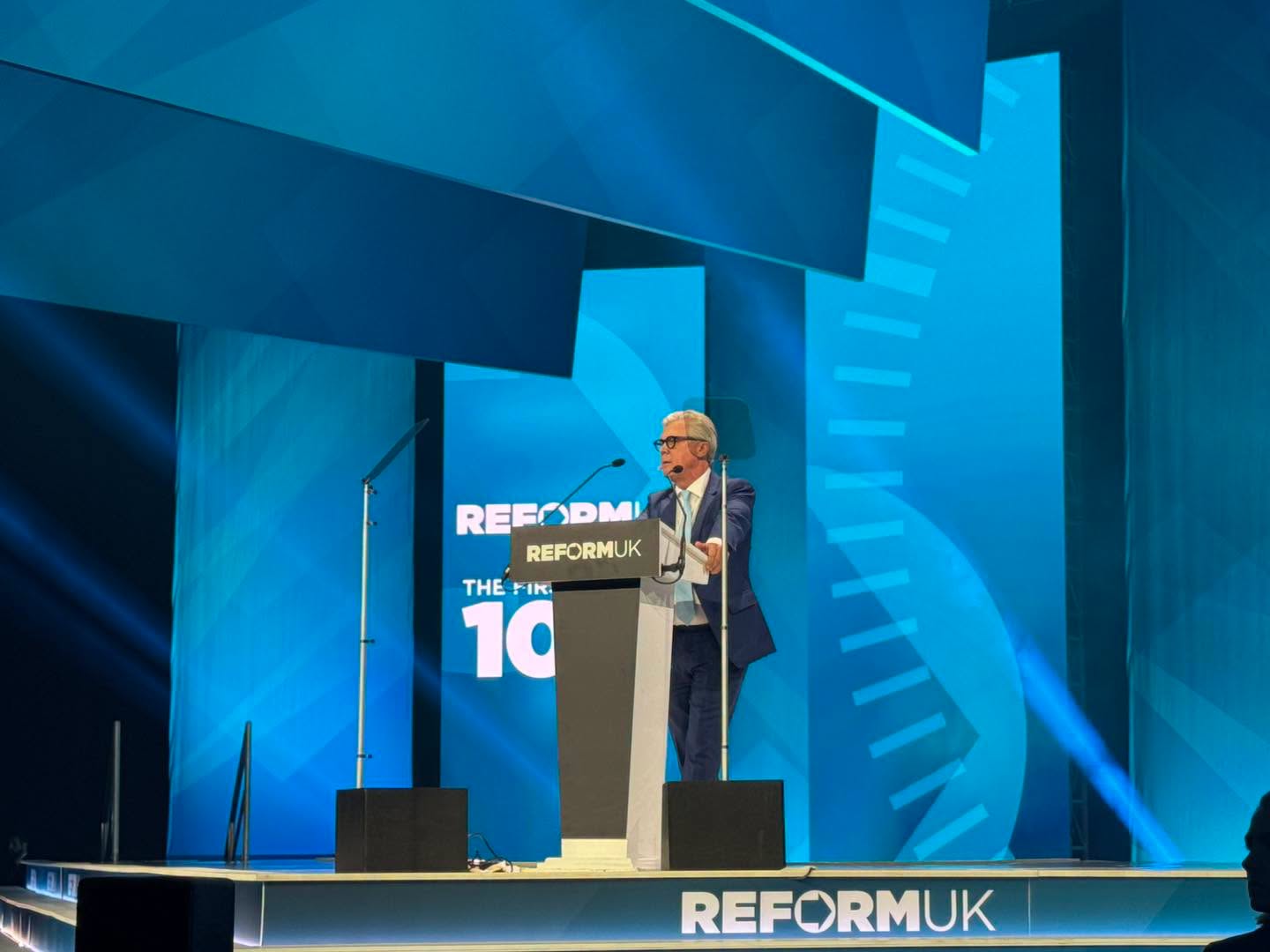
Malcolm Offord – Leader of Reform Scotland
Malcolm Offord’s Recovery Plan for Scotland
Tax, work, skills, enterprise and accountable government: what Reform UK Scotland’s leader said in Birmingham, what it would mean, and why his argument matters for Scotland’s future.
Reform UK Conference 2026 • Birmingham NEC • Saturday 5 September
For the first time in a long time, Scotland and its people have a real political choice. For far too long, voters have been asked to choose between the disastrous, dogmatic SNP, propped up by Green zealots while selling its supporters impossible dreams it can never deliver, and the weak-sauce uniparty medley of Labour, the Conservatives and the Liberal Democrats. It has been the same old, same old. But in his first speech to Reform UK’s national conference, Malcolm Offord outlined a different course: a recovery plan for Scotland.
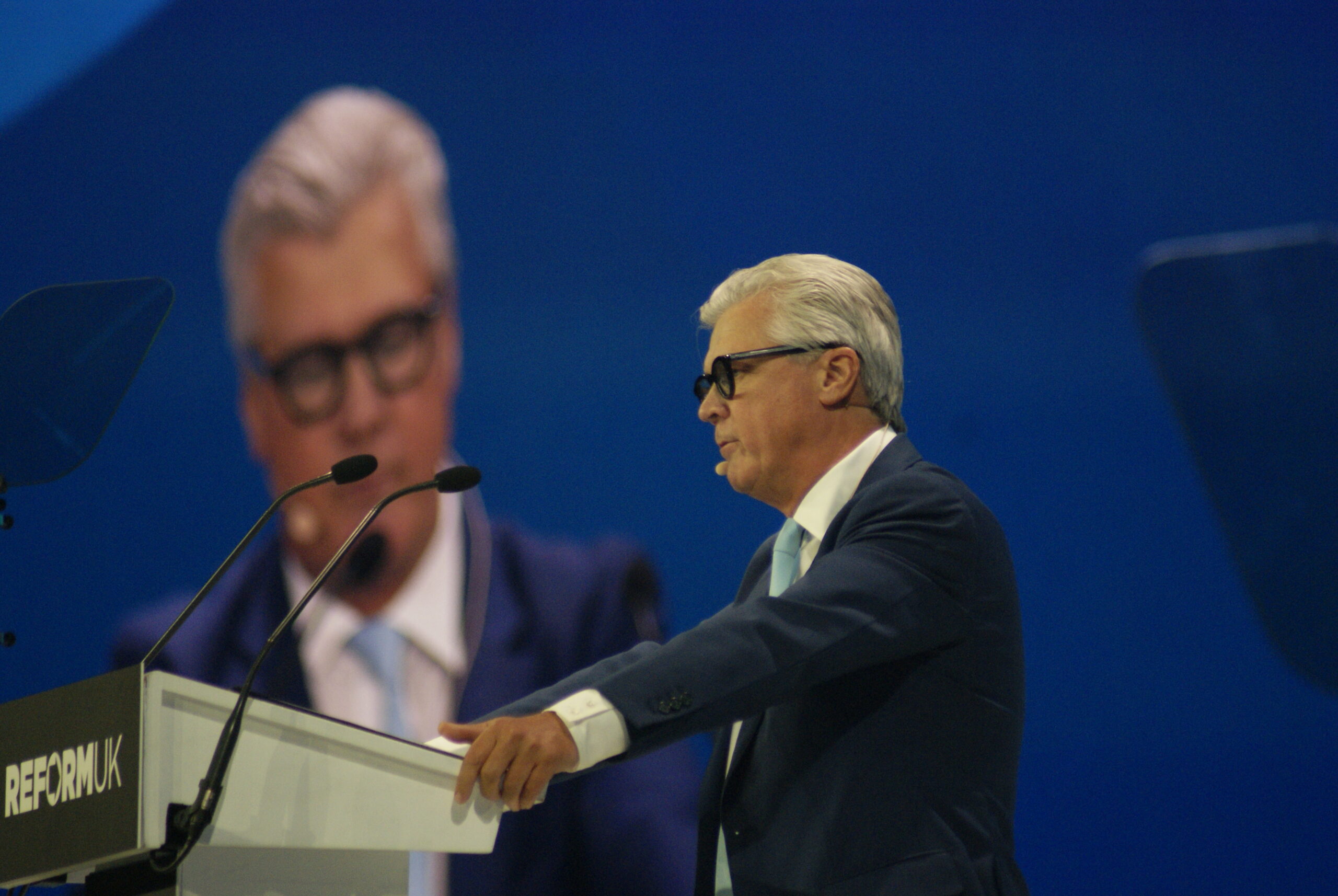
Malcolm Offord came to the Reform UK Conference stage on his 62nd birthday, weeks after surgery for prostate cancer, and delivered something more substantial than a conventional party rally. There were jokes, including a mischievous proposal for a “Murrell Collection” built around items Offord said were bought from embezzled SNP funds. But the humour quickly gave way to a tightly connected political case: Scotland spends too much for too little, taxes productive people too heavily, leaves too many adults outside work, undervalues technical education and neglects the small firms capable of rebuilding local economies.
This was also the speech of a leader whose party has moved from the margins to joint second place at Holyrood. Offord reminded the hall that Reform returned 17 MSPs with 385,000 votes. His bigger target, however, was the roughly two million electors who did not vote in May. His word for them was unmistakably Scottish: “scunnered”. They are not merely undecided between parties, he argued; many no longer believe Holyrood changes their lives for the better.

The speech in one verdict
That is the thread linking every part of Offord’s address. Tax matters because it changes whether a nurse takes another shift. Welfare matters because work gives both dignity and revenue. Colleges matter because Scotland needs welders and technicians, not simply more graduates. Small businesses matter because the mass employers of Greenock’s past are gone. Westminster matters because immigration, UK welfare, energy licensing and most employment taxes remain reserved. Holyrood matters because it still controls schools, hospitals, policing, Scottish income-tax bands and much of economic development.
Watch Malcolm Offord’s full conference speech
Hear the argument in full, including his tax, work, skills and growth proposals.
1. More spending has not guaranteed better Scotland
Offord began with the national accounts. He rounded Scotland’s annual public revenue to about £100 billion, expenditure to about £125 billion and the gap to £25 billion. Those figures closely track the latest official GERS outturn: £98.3 billion of revenue, £123.6 billion of spending and a notional fiscal deficit of £25.3 billion in 2025–26, or 10.9 per cent of GDP. GERS describes Scotland inside the present United Kingdom; it is not a forecast budget for an independent state. Yet it does establish the scale of the present imbalance.
“For the extra money, are our schools better? Are our hospitals better? Are our roads better? Are our communities safer? Are our police properly funded?”
— Malcolm Offord
His most important point was not the deficit by itself. It was the absence of a reliable connection between the amount spent and the quality delivered. Public expenditure has grown enormously over the devolution era, while basic outcomes remain under pressure. Offord pointed to poor literacy at the end of primary school, weaker international education performance, irregular attendance, NHS capacity left unused for lack of staff and communities that do not feel safer.
The impact of this argument is significant. It rejects the ritual debate in which one side announces another funding increase and the other is accused of wanting cuts. Reform’s test is output: did waiting times fall, did attainment rise, did the road get repaired, and can the public identify who is responsible? That does not remove the need for spending. It raises the standard that spending must meet.
2. Scotland’s six-band tax system is now an economic choice
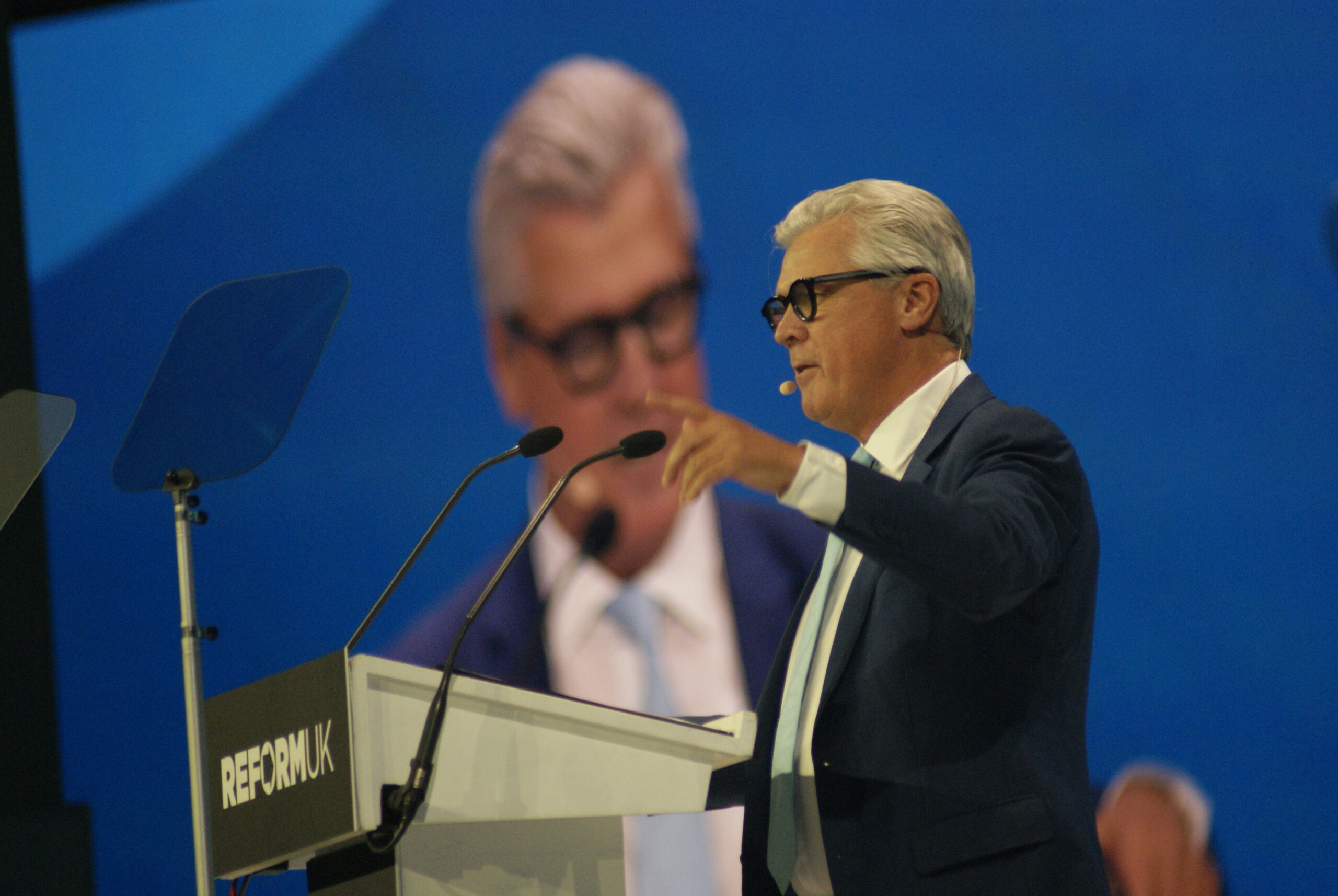
The sharpest passage concerned income tax. Scotland has six rates on non-savings, non-dividend income in 2026–27, with a 42 per cent higher rate beginning at £43,663 and a 48 per cent top rate. The Scottish Government’s defence is that more than half of taxpayers can expect to pay less than elsewhere in the UK and that higher receipts fund services and benefits. Offord’s reply is that the system should be judged not only by what it collects today, but by the work, recruitment and investment it discourages tomorrow.
“We’re dragging a lot of people who would normally be in medium wages, like nurses, etc., into higher tax bands, which is nuts.”
— Malcolm Offord
He described workers losing as much as 70 per cent of an extra pound when Scottish income tax interacts with withdrawn allowances or benefits. That is a marginal effect, not Scotland’s headline tax rate, and some of the interacting rules are reserved to Westminster. The practical question remains powerful: why take an extra shift or accept more responsibility if only a small fraction of the reward reaches your pay packet?
Reform’s published Holyrood answer is more specific than the speech. It would scrap the six-band structure, mirror the three bands used elsewhere in the UK and set Scottish rates 1p below them, with an objective of reaching 3p below during the five-year term. It would also tackle devolved cliff edges so that, where Holyrood has the power, people retain at least half of each extra pound earned. The UK Personal Allowance and National Insurance are Westminster matters; Offord cannot alter them from Holyrood and does not pretend otherwise.
For Scotland’s future, this is a choice between two theories. The SNP sees differentiated progressive taxation as a way to sustain a larger state. Reform sees the same system as a warning sign to mobile professionals, employers and entrepreneurs. Scotland competes for people and capital inside one UK labour market. If an experienced clinician, engineer or manager can cross the border for a higher take-home return, tax policy eventually becomes workforce policy.
3. The three-million-worker ambition
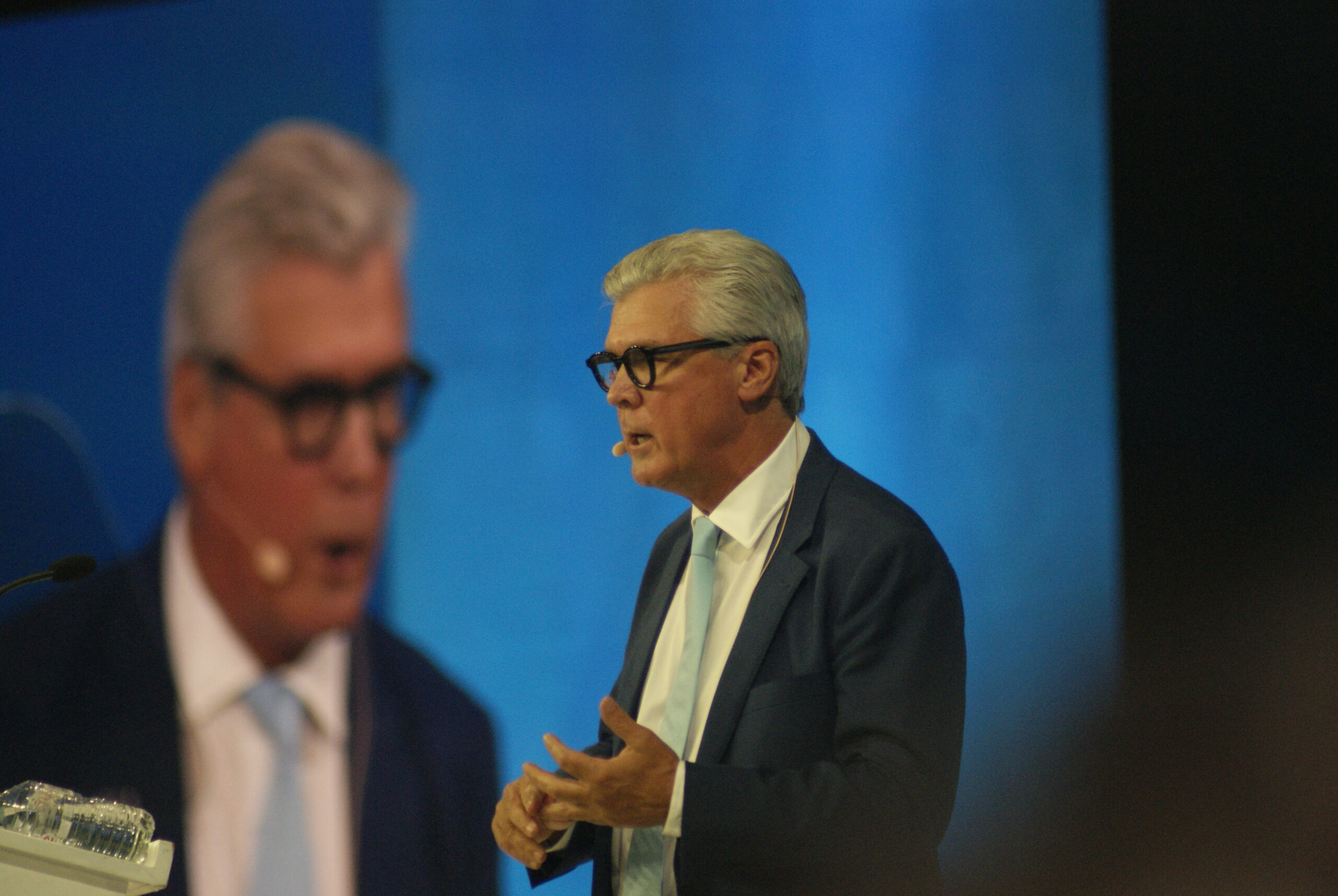
Offord then moved from tax to participation. He told conference that Scotland has around 3.6 million working-age adults and about 900,000 not working. His target is three million people in work: not by forcing pensioners or the genuinely disabled into jobs, but by helping back a share of those unemployed, economically inactive through sickness, or otherwise disconnected from the labour market.
“Let’s set our target to have three million people working in Scotland.”
— Malcolm Offord
A target is not a delivery plan, and reaching it would require strong labour demand, health support, childcare, transport, skills and careful treatment of people whose conditions limit what they can do. But the direction is clear. A sustainable Scotland cannot rest an ever-larger welfare and public-service burden on a static productive base. More people in secure, well-paid work means greater independence for households, more customers for local firms and a broader tax base for the NHS and schools.
That led naturally to education. Offord challenged the assumption that sending half of young people to university is automatically a success. His most memorable line was deliberately provocative: “We don’t need more sociology degrees; we need more welders.” The caricature will annoy graduates, but the underlying criticism is serious. A qualification is not valuable because it is called a degree; it is valuable when it develops the person and equips them for a life of contribution.
His example came from shipbuilding at Rosyth. Modern welding, he said, can mean controlling advanced equipment from a computer, with skilled workers earning around £80,000. Yet when hundreds more welders were needed, he said the relevant course at Fife College had closed and labour was recruited from the Philippines. The speech did not document each step in that account, but the policy failure it illustrates is familiar: Scotland says it needs technical skills, then underfunds or downgrades the routes that provide them.
The published Reform programme joins colleges and apprenticeships to Scotland’s strengths in financial services, advanced manufacturing, energy, food and drink, tourism and hospitality, creative industries, life sciences, agriculture, fisheries and marine work. Westminster’s separate Apprenticeship Wage Credit would support small firms taking on 16-to-18-year-olds; Holyrood’s task is to align colleges and training with the jobs Scotland can actually create. Immigration should fill exceptional shortages, Offord argued, not excuse a permanent failure to train people here.
4. Rebuild towns through small business
Offord’s personal history gave this section its force. He grew up in Greenock when the shipyards employed thousands. Electronics arrived after shipbuilding declined, then call centres after electronics. Each wave became smaller and less secure. His conclusion was not that a minister can recreate the old mass employer. It was that recovery now depends on many local firms rooted in their communities.
“They’re told they’ve got the broadest shoulders, but they’re now shrugging their shoulders and saying, ‘Why would I bother? I’m not expanding my business. I’m not hiring anybody more.’”
— Malcolm Offord
This is where tax, planning, energy and skills meet. An owner who expects the next expansion to bring another rate rise, planning delay, employment cost and energy shock will remain small. Reform’s Scottish manifesto proposes reversing the April 2026 business-rates revaluation and phasing out Land and Buildings Transaction Tax on a revenue-neutral path. Its Westminster small-business contract adds a higher VAT threshold, a lower employer National Insurance rate for British workers and direct support for apprentice wages. The jurisdictions differ, but the intended effect is one pro-enterprise environment.
Offord’s gene-editing example made the same case from another angle. He described work at the James Hutton Institute on more resilient potato strains and attacked political alignment with restrictive rules that could prevent Scotland commercialising innovation. The larger principle is sound even where regulatory details demand care: Scotland’s universities and institutes should be turning research into companies, exports and productive jobs, not watching discoveries move elsewhere.

5. One recovery plan, two governments
Perhaps the most strategically important part of the speech was Offord’s candour about power. Holyrood controls many services that shape daily life, but major levers remain at Westminster. He set out a sequence: build local representation in the 2027 council elections, help elect a Reform UK government at Westminster, then prepare to seek government in Holyrood in 2031.
The division matters. A Scottish Government can change Scottish income-tax rates and bands, education, devolved planning, business rates, NHS Scotland and social-security administration. It cannot set the UK Personal Allowance, employer National Insurance, VAT, immigration law or North Sea licensing. Offord’s case is that Reform needs both levels pulling in the same direction: Westminster on borders, reserved welfare, energy and UK taxes; Holyrood on public-service delivery, Scottish tax and the barriers it controls.
Immigration shows why that distinction is essential. Offord argued that pressure on Glasgow’s housing and homelessness system proves this is not merely an English concern. BBC reporting found more than 6,500 people seeking asylum and receiving Home Office support in Scotland, over half in Glasgow; once refugees receive leave to remain, councils face the housing duty. Glasgow reported £38 million of related homelessness costs in 2025–26. Westminster decides asylum and borders. Holyrood decides Scotland’s housing framework, and Reform’s published Scottish policy is to restore a local-connection test and end Glasgow’s dispersal-city status.
That is more credible than pretending one parliament can do everything. It also creates a demanding test for Reform. If the party asks voters for power at council, Scottish and UK levels, it must publish milestones, cost the transitions and accept responsibility when delivery falls short. Offord welcomed the conference promise from senior figures to resign if they failed their stated tasks. Accountability cannot stop at a good line from the stage; it must become measurable government.
Why Scotland must choose Reform
Scotland is not poor, powerless or short of talent. It has been governed as though every problem requires another agency, strategy, tax band or spending announcement. Reform starts from the opposite end: the citizen who works, the owner who risks capital, the college that teaches a trade and the minister whose name is attached to a result.
There is no choice between public services and enterprise. Without enterprise there is no durable revenue for public services. There is no choice between compassion and work either. Helping someone back into a good job is more compassionate than managing long-term inactivity. Scotland needs excellent universities and excellent technical colleges; domestic training and controlled immigration; a safety net for genuine need and an economy in which contribution is rewarded.
Reform will prove that every saving proposed is deliverable, every tax transition is affordable and every target survives contact with government. The existing model has already had a quarter of a century. After record taxation and sustained spending growth, the services are not good enough, communities are not more secure, and too many young Scots cannot see a better future.
His answer was a recovery government built around growth, employment and innovation. For voters who are scunnered with managed decline, that is why Scotland needs Reform.