Holyrood
Farage rallies Reform’s Scottish team for the election he sees coming
Nigel Farage spent Monday in Edinburgh with Malcolm Offord and Reform’s 17 MSPs. He believes Britain could be at the polls within months, and he came north to make sure the Scottish party is ready when it happens.
A day with the Scottish team
Nigel Farage landed in Edinburgh on Monday morning and told his followers exactly why he had come.
“I have just arrived in Edinburgh to meet with Malcolm Offord and his team. Scotland needs Reform.”
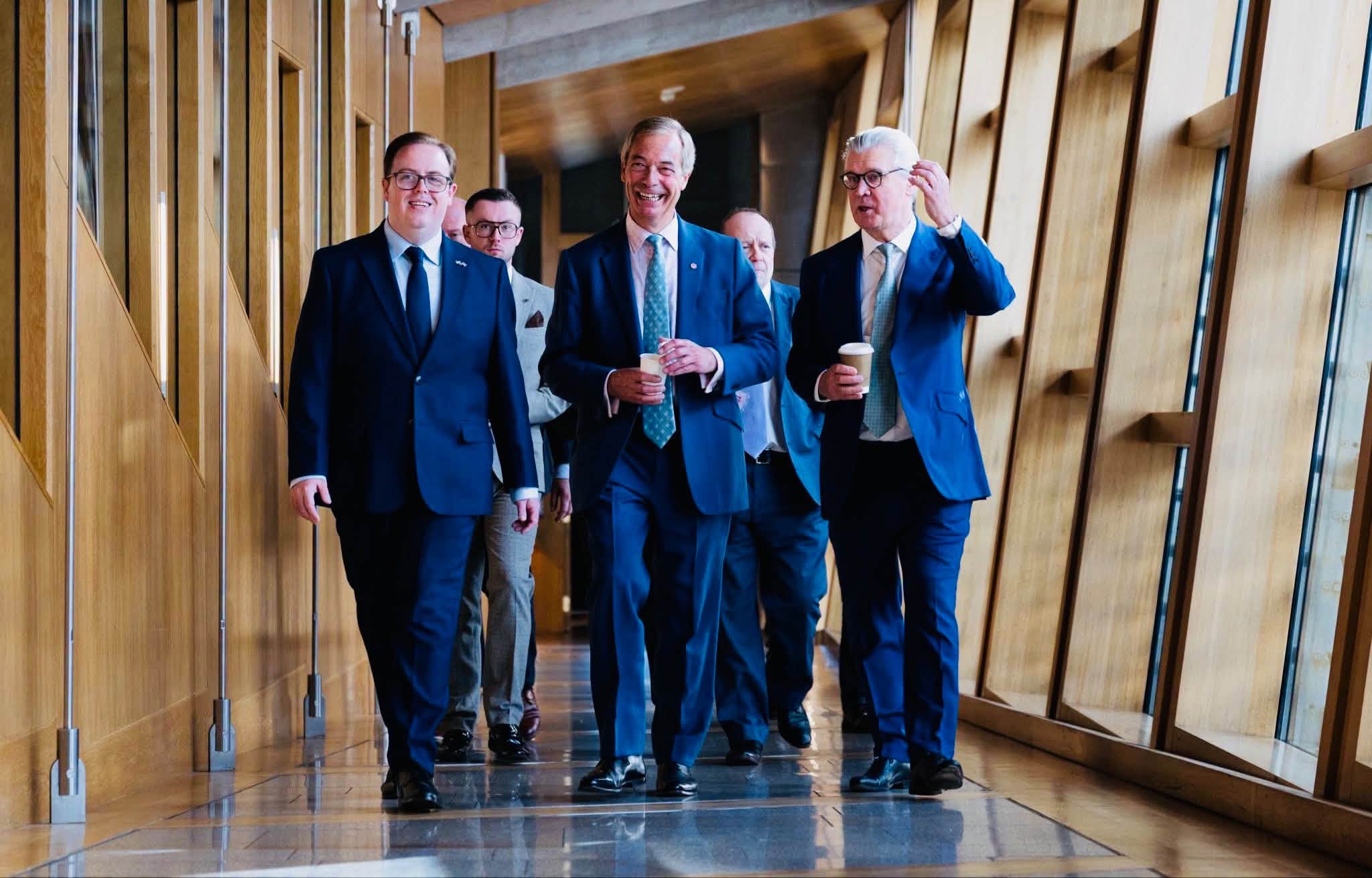
Within a couple of hours he was walking the corridors of the Scottish Parliament with Offord and the MSPs who, since May, have made Reform the joint second party at Holyrood. It was a working visit rather than a rally. Farage toured the building, spent time in Reform’s parliamentary offices, sat in the chamber and then joined the group for lunch at the Royal Scots Club in the New Town. Reform UK Scotland summed up the day in a single line: “It was great to welcome Nigel Farage to Holyrood today.”
Why now
The timing was no accident. For two years Farage has predicted that the next general election will come early, and he has not wavered. Last week he told GB News there was a better-than-even chance of a snap election by spring 2027, and a one-in-four chance of one before Christmas. Andy Burnham insists the country will not vote until 2029, but Farage is not taking the Prime Minister at his word. As he put it to The Telegraph, Burnham simply did not want the question overshadowing Labour’s conference.
Earlier this month Farage said Reform was now 80 per cent ready for that contest, up from halfway a year ago. “If there is an election in May,” he said, “we will be ready.” He is now about to set off on a national tour, starting in Yorkshire, that will take him to every region before November. Before it begins, he made time for Scotland. Reform has 17 MSPs at Holyrood but none of Scotland’s 57 seats at Westminster, and the MSPs, their offices and the activists around them are the organisation that will have to change that when the country goes to the polls.
The people who keep it running
Much of the day was spent in Reform’s offices, where the Holyrood staff answer constituents’ letters, draft questions and get the group ready for each week’s business. Farage took his time there, shaking hands and sharing a joke with the people who keep a new parliamentary party on its feet.
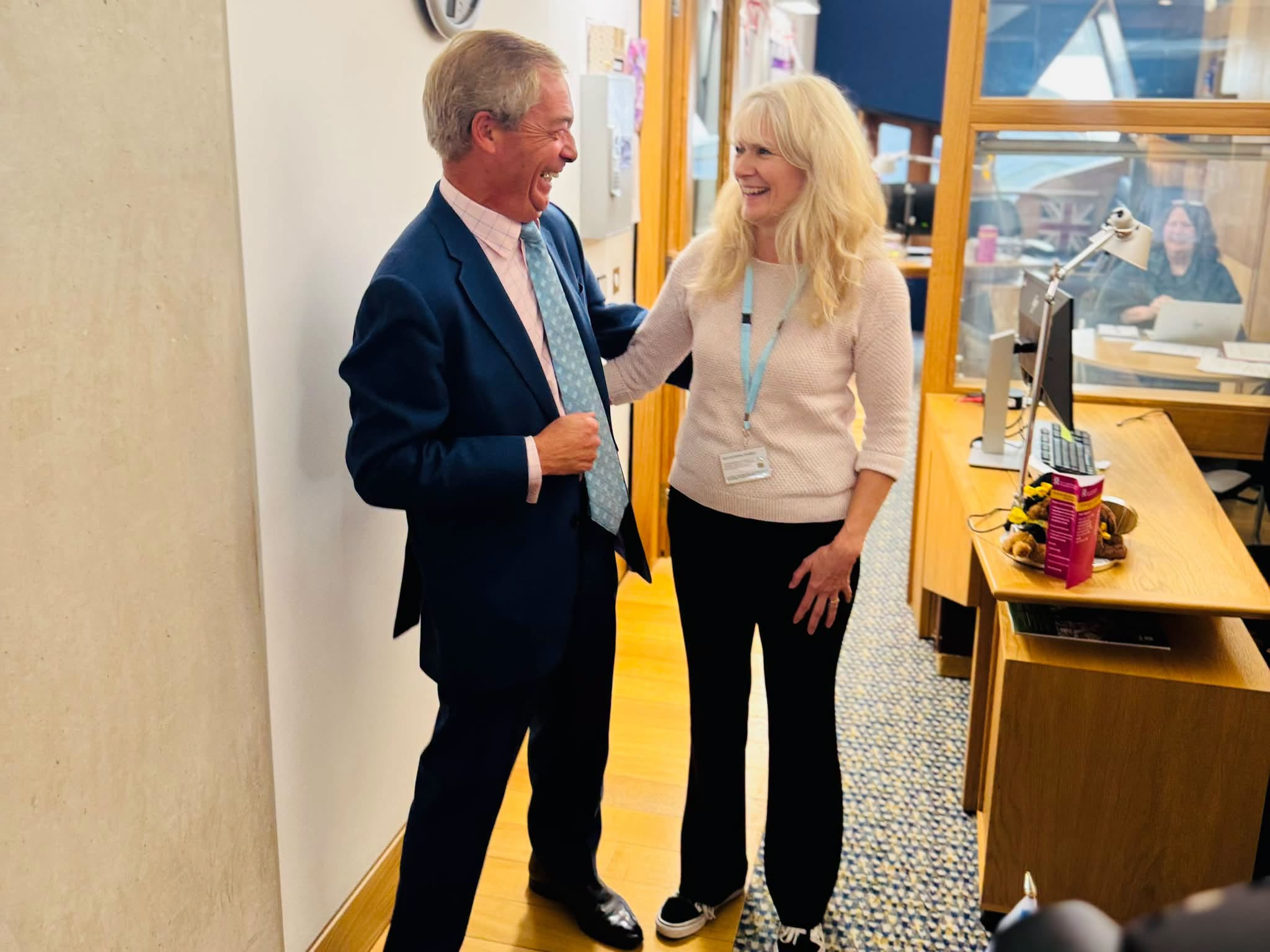
It has been a demanding first few months for the group. A week before the visit, all 17 MSPs walked out of John Swinney’s independence debate, arguing that Holyrood should be dealing with the NHS, schools, housing and crime rather than a referendum it has no power to hold. The walkout drew a rebuke from the Presiding Officer and a good deal of criticism in the press. Farage came to Edinburgh and backed it, saying it showed Reform was making its mark in Scotland.
A hostile reception from the press
Farage had barely left the building before the coverage turned. A party leader spending the day with his own MSPs was written up, in turn, as a poll collapse, a flying visit and a breach of parliamentary rules. The leaders of the SNP, Labour and the Conservatives visit their Holyrood groups as a matter of routine, and when those visits are reported at all, they are reported as what they are. No other party is treated this way for doing the same thing.
This is not a one-off. Since Reform broke through in May, much of Scotland’s press has covered the party with a bias that has become blatant. Scotland has a daily paper that campaigns openly for independence, and a political press that too often takes its lines from the SNP. Reform’s arguments get a sentence, while the insults thrown at the party get the headline. When Reform MSPs raise hospital waiting lists, drug deaths or the state of Scotland’s schools, the story is usually about their manners, their polling or their leader, and seldom about the problem they raised. Voters who back Reform are entitled to coverage that reports what the party says and does, not a running commentary written by its opponents.
How the visit was reported
- The National: “Nigel Farage in Edinburgh as Reform plummet in polls.”
- The National: “Nigel Farage swats away Scottish poll threat in Edinburgh visit.”
- Daily Record: a “flying visit” to a “posh members’ club”.
- The National, the next day: “Reform UK breach Holyrood rules during Nigel Farage visit.”
- The Scotsman: “Reform removes Nigel Farage content after complaint by Holyrood bosses.”
The National, a newspaper that campaigns for independence, built its first story around a poll it had published the week before. Commissioned by Believe in Scotland, the Norstat survey asked voters to imagine Reform winning a general election and Farage becoming Prime Minister, and reported that support for independence would then rise to 65 per cent. A hypothetical question from a campaign group became the lens for a visit to Holyrood, with two Westminster seat projections added to support the claim that Reform was “plummeting”. Farage’s answer was that he had heard it all before: “If Britain votes to leave the European Union, Scotland will leave within three years. You hear all these threats. Don’t take them seriously.”
The Daily Record went for the sneer, then handed much of its report to SNP MSP David Linden, who called Farage and his colleagues “Westminster establishment clowns” on a “jaunt” and “poisonous characters” come to “spread hate and division”. By the next morning the story had moved on to the parliament’s media rules, and an SNP spokesperson was telling The National that Farage had been “parading around Scotland’s parliament on a marketing tour”.
The rules point itself is a narrow one. Holyrood’s corporate body does not allow filming or photography in the building “of a party political nature or for party political purposes”. At its request, one post was taken down on Monday and changes were asked for to another. That became “Reform UK breach Holyrood rules”. Only days earlier, John Swinney had travelled to Cardiff to sign a memorandum of understanding with the leaders of Plaid Cymru and Sinn Féin, declaring that Westminster’s time was coming to an end. The National called it a landmark.
Reform has heard the charge of bad manners before. When the MSPs walked out of the independence debate, Presiding Officer Kenneth Gibson called it “a gross discourtesy”. The party’s answer has not changed.
“Reform isn’t here to be courteous — we’re here to get answers and fight for Scotland.”
Getting ready for the fight
Before he left Holyrood, Farage sat down in the chamber beside Offord and one of the group’s MSPs, in the room where Reform now challenges the SNP government every week.
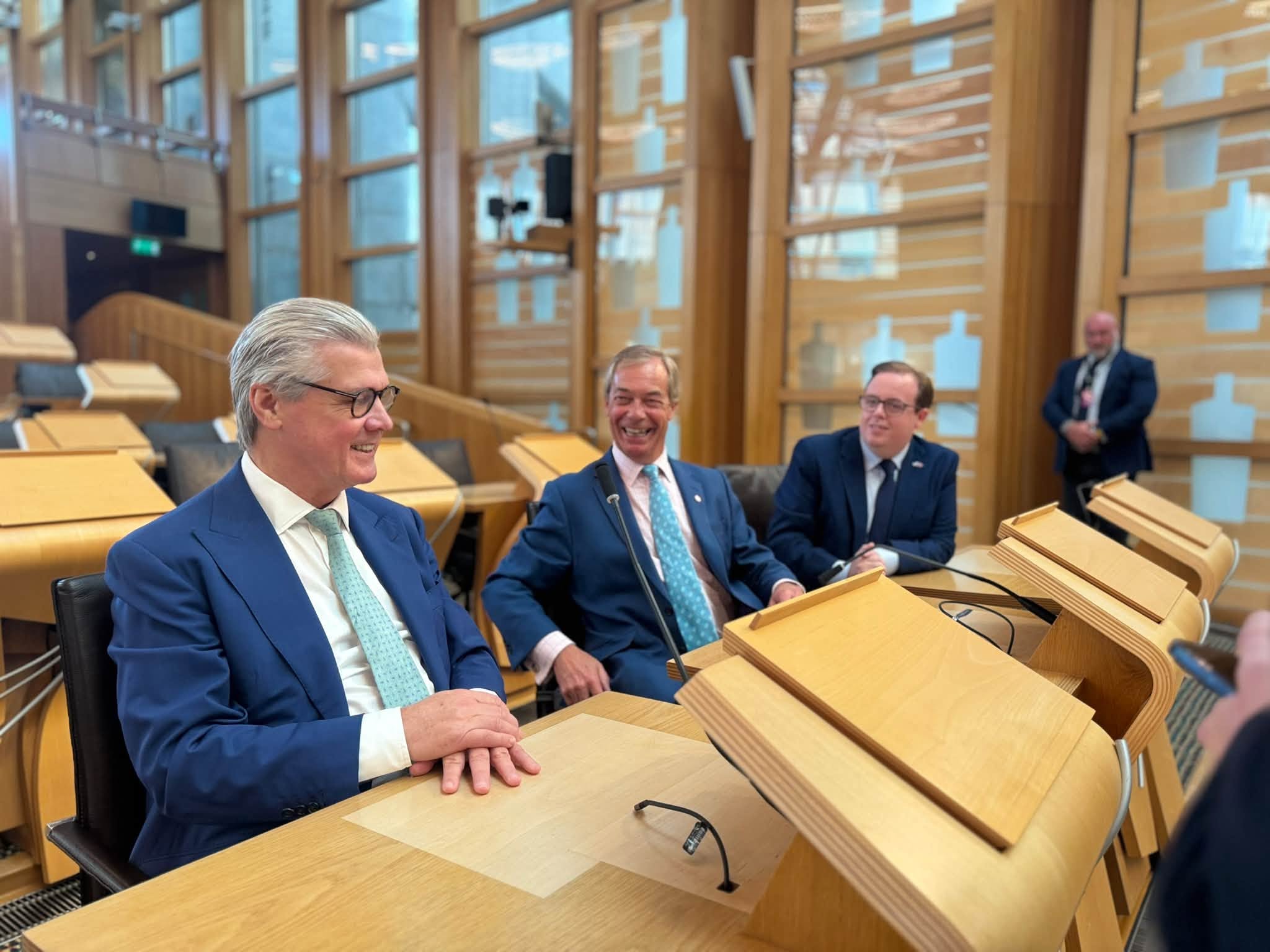
Offord set out the road ahead at Reform’s conference this month: build a local base in the 2027 council elections, help elect a Reform government at Westminster, then seek to govern Scotland from Holyrood in 2031. If Farage is right about an election next spring, that middle step arrives much sooner than anyone planned for. Scotland’s Holyrood group would become the backbone of the Westminster campaign north of the border, and Monday’s visit was about making sure it is ready to take on that job.
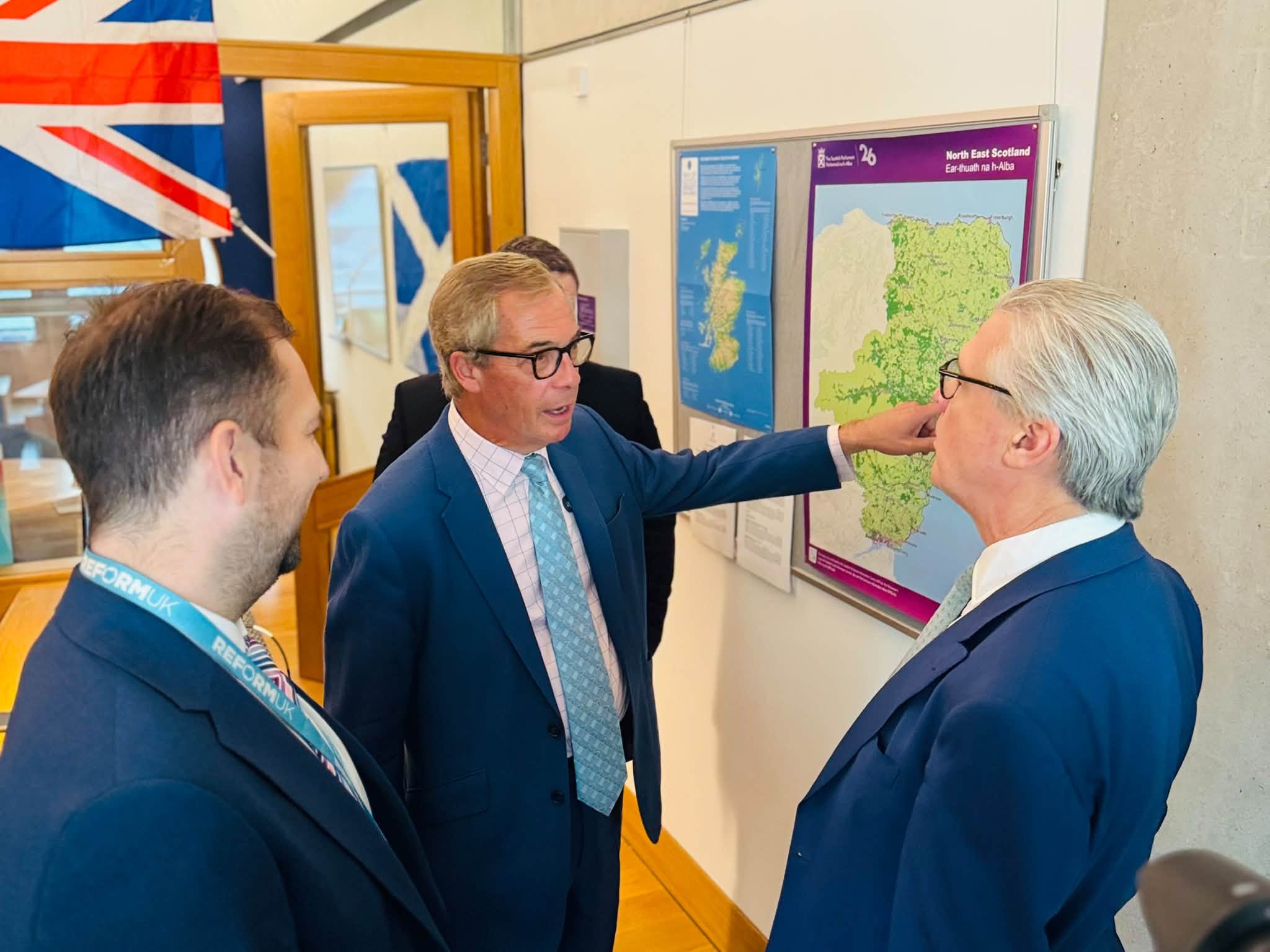
One of the last pictures from the day catches the mood. In the group’s office, under a Union flag and a Saltire, Farage stands at the map of North East Scotland with Offord, pointing out the ground. Whenever the election comes, whether next spring or later, he wants Reform in Scotland organised and ready for it. That is why he came to Holyrood, and he left with the same message he arrived with: Scotland needs Reform.
Farage came to Holyrood to get his Scottish team ready for an election he believes is coming. Scotland needs Reform.