Holyrood · Free Speech
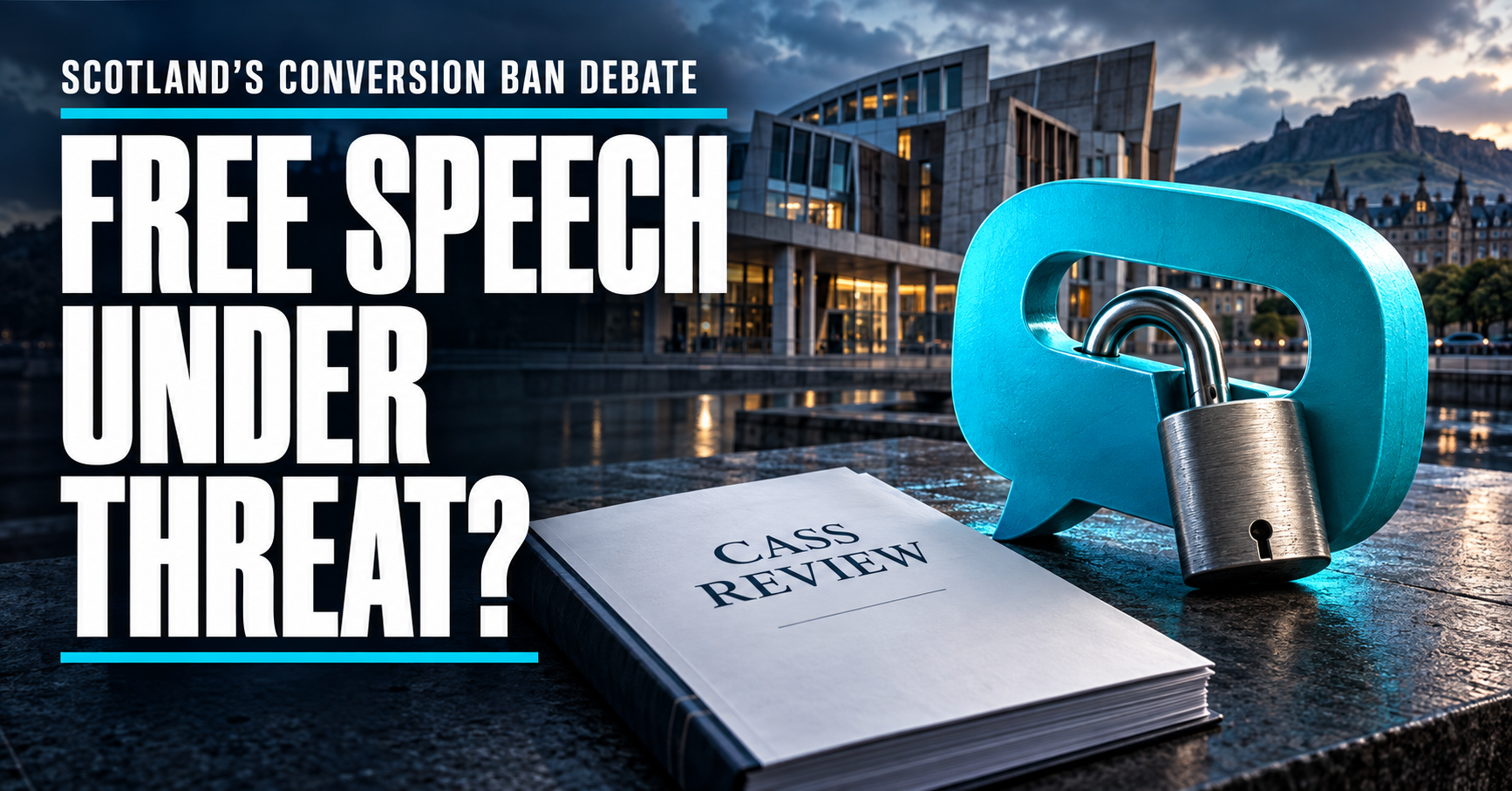
SNP conference backs a conversion practices ban that ignores the Cass Review
Delegates in Aberdeen voted for a “comprehensive” ban within a year. Reform’s Amanda Lindsay MSP says it puts ordinary parents, therapists and faith leaders in the firing line, and that Reform will fight it.
A good afternoon’s virtue signalling
SNP members met in Aberdeen on Thursday and passed a motion calling for a complete ban on conversion practices, to be in place within a year. Conference motions are cheap. They cost nothing to pass, nobody has to explain how they would work, and the delegates go home feeling good about themselves. This one does nothing for anyone stuck on an NHS waiting list or a council housing list, which is where most Scots would like a governing party to be looking.
Nobody is defending abuse. Cruelty or coercion towards a young person is wrong, and nobody needs a conference vote to be told so. The worry is how far a “comprehensive” ban with a one-year deadline might reach once it is written into law. Amanda Lindsay, Reform’s Shadow Minister for Women and Equalities, says it threatens to criminalise ordinary parents, therapists and faith leaders who do not instantly affirm gender ideology. Think of the mum who says let’s wait and see. The counsellor who asks a few questions before agreeing to anything. The minister who preaches what his church has always taught. Those are the people who would be reading the small print.
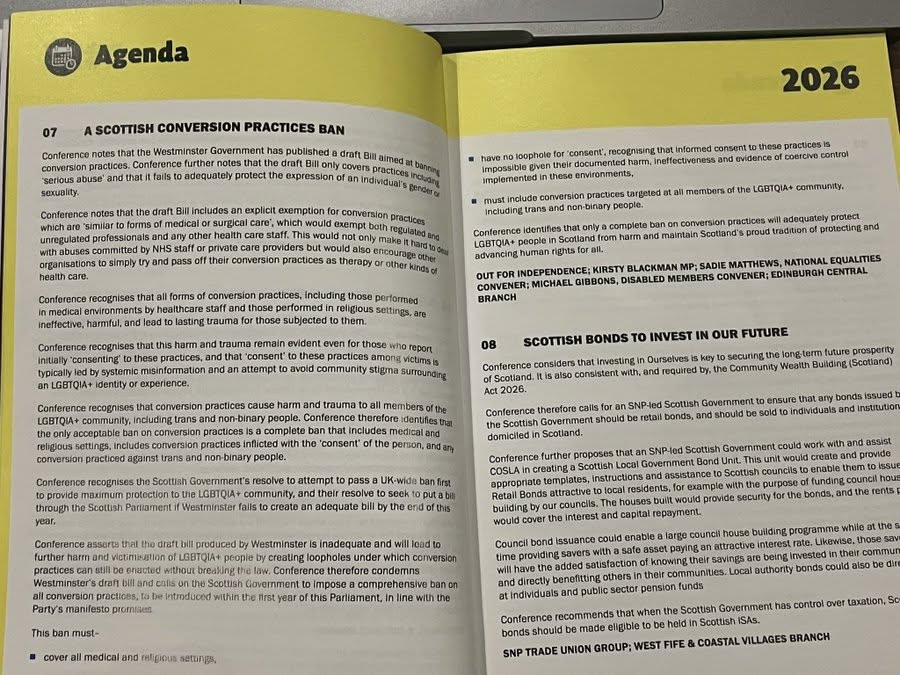
The wording is there for anyone to read. Item 07 says the ban must “cover all medical and religious settings” and have “no loophole for ‘consent’”, on the grounds that informed consent to these practices is impossible. It also condemns Westminster’s draft bill for exempting practices “similar to forms of medical or surgical care”. So the SNP’s own text reaches into the clinic and the church, and overrides the consent of the person involved. That is the context for Lindsay’s warning about therapists and faith leaders.
What the SNP is actually proposing
Strip away the conference language and item 07 asks the Scottish Government to bring in a new law within the first year of this Parliament, which opened after the May election, so by roughly next May. The SNP’s case is that conversion practices are ineffective and harmful, and that only a complete ban protects LGBTQIA+ people. Here is what the motion asks for, point by point.
What actually is “conversion practice”?
In everyday use it means an attempt to change or suppress someone’s sexual orientation or gender identity, the coercive kind of “cure” that almost nobody defends. The worry is how much more it could be taken to cover. Take a distressed 14-year-old who has spent much of the past year online, among people telling them they must be trans. A parent or counsellor who sits down with them, asks what is going on, encourages some time offline and reassures them that being unsure at that age does not mean they have to decide anything now, is trying to help, not to “convert” anyone. Yet under a ban with no clear definition and no room for caution, it is not obvious that they would be safe. Where the line sits is the whole argument.
| What the motion says | What that means |
|---|---|
| A “complete ban” on conversion practices | A new legal ban with no carve-outs for particular kinds of practice. Anything that counts as a conversion practice is banned. |
| Must “cover all medical and religious settings” | Healthcare staff, whether NHS or private, and religious leaders and groups would all be inside the ban. Neither gets an exemption. |
| “No loophole for ‘consent’” | Saying yes would not be a defence. The motion’s view is that informed consent to these practices is “impossible”, so a person who agrees to take part is treated the same as one who was pressured. |
| Must include practices aimed at “trans and non-binary people” | The ban is not limited to sexual orientation. It also covers practices aimed at someone’s gender identity. |
| Condemns Westminster’s draft bill | The SNP says the UK Government’s draft covers only “serious abuse” and exempts practices “similar to forms of medical or surgical care”. It wants Holyrood to go further. |
Put together, the ban would reach doctors and other healthcare staff, religious leaders and religious groups, cases where the person says they agreed, and practices aimed at trans and non-binary people as well as at sexual orientation. That is a lot of ground for one law to cover.
There are three things the printed motion does not do. It does not say what counts as a “conversion practice”, and that definition decides who gets caught. It does not mention parents. And it is not a law. It is a call on the Scottish Government, which would still have to publish a bill and get it through Holyrood. The motion itself notes the Government’s intention to do that if Westminster has not produced an adequate bill by the end of this year. The missing definition is the gap that Lindsay’s warning about parents, therapists and faith leaders sits in.
What Amanda Lindsay said
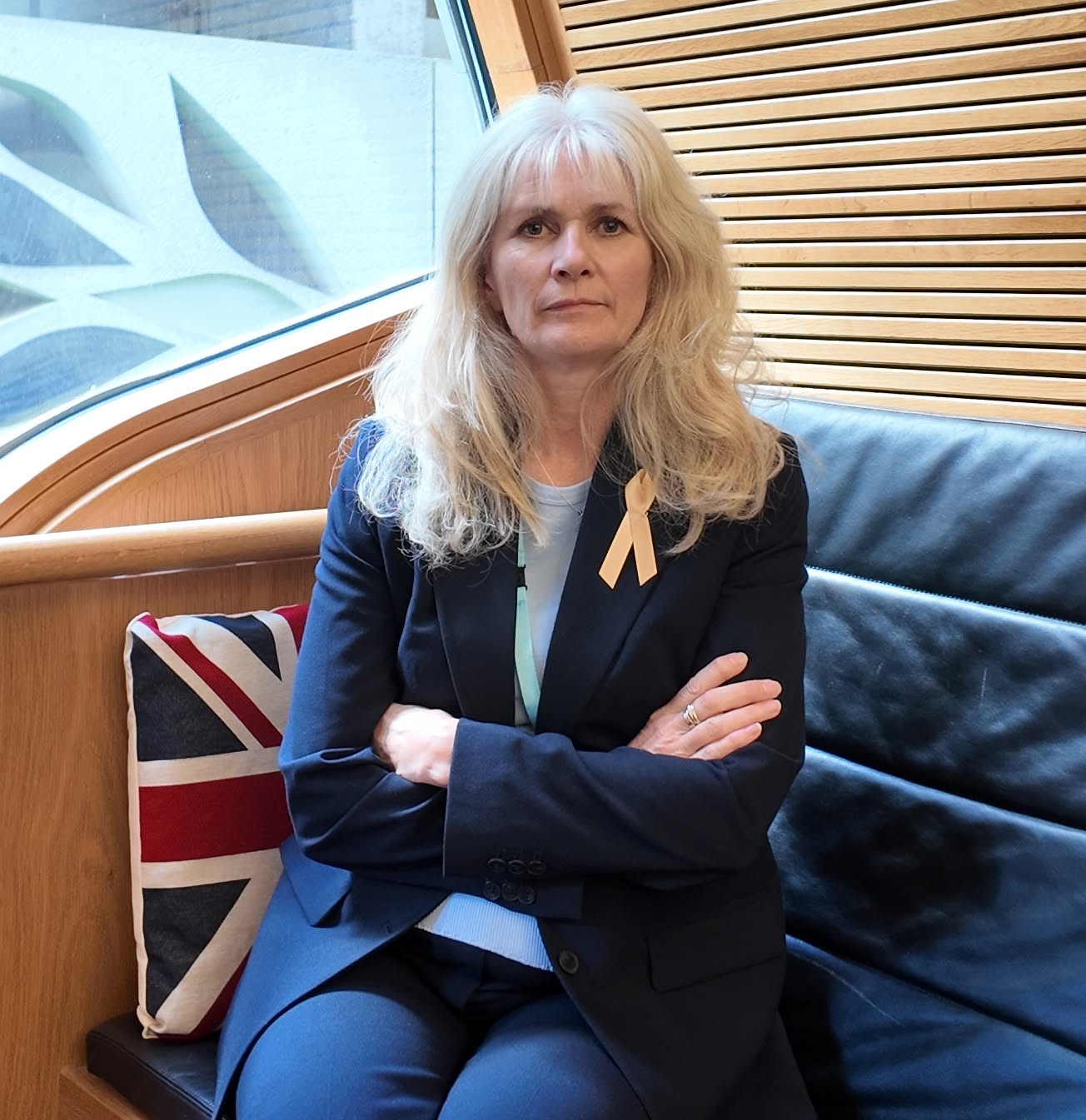
The evidence they skipped
The Cass Review is the obvious gap. Dr Hilary Cass reported on NHS gender services for children in April 2024 and found the evidence behind puberty blockers and hormones for young people was weak. Her advice was to slow down, assess properly and look at the whole child. A ban that leaves no room for caution sits badly with that.
Then there is the line Lindsay quoted from Joanna Cherry. Cherry is a KC and a former SNP MP, and the word she chose for her old party’s conference scrutiny was “laughable”. It is hard to argue with her. When someone who sat on the SNP benches says motions get waved through without a proper look, the rest of us are entitled to treat the result with some suspicion.
Reform will oppose it
This is not just tactics. It starts from a principle that is already in our Scottish manifesto: Scots should be free to speak. We have committed to abolishing the SNP’s “intrusive, ideologically motivated” Hate Crime and Public Order (Scotland) Act, “restoring freedom of speech and allowing police to focus on real crime”. A conversion practices ban like the one passed in Aberdeen runs the other way. It adds another law about what can be said in a consulting room or a church and, on Lindsay’s reading, around the kitchen table. Reform does not think the state belongs in those conversations.
Then there is family and faith. Reform’s published platform calls family “the foundation of society”, promises to support parents, and says religious freedom is “a core feature of our culture”. Parents, ministers and counsellors are the people closest to a struggling young person. Lindsay’s warning is that a ban like this “threatens to criminalise” them, which is why she calls it “a direct attack on free speech and family life”. For Reform, that is the heart of it.
Lastly, the ideology. Our manifesto records that even purist nationalists are appalled that the SNP has put “woke policies on immigration and gender” ahead of protecting local communities and women and girls. Lindsay calls the same thing “gender ideology”. Cass urged caution, and the SNP has passed a motion that leaves little room for it. Joanna Cherry says bans like this are “designed to stop people talking”. Reform would rather listen to the evidence than legislate as if the argument were over.
The SNP has run Scotland since 2007, and its members used their moment in Aberdeen on this. Lindsay says Reform’s MSPs will fight it “every step of the way”. They will, and they will keep asking why a party with that record thinks this is the priority.
The SNP has had since 2007 to fix the basics. It chose to talk about this instead.